Thursday, October 25, 2018

Remember, He's Not Irreplaceable


In Beyoncé’s music video for her song Irreplaceable, which was released on December 5th, 2006, the audience is shown a very young Beyoncé who has just broken up with a man that cheated on her and has decided to kick him out of her house. Throughout the video, she embodies a lot of sass, self-confidence, and strength. The music video plays with elements of Mise-en-scène such as the position of cameras and props to show the message that she is trying to portray to her audience: she does not need a man by her side who does not uplift her and that she can always find someone better.
Through the use of the position of cameras, the producer manages to successfully manipulate what the audience sees. After the ex-boyfriend leaves, there is a scene where Beyoncé is admiring her beauty and physique. This scene takes place in her closet where she is surrounded by at least five full-body mirrors. The camera is focused on the many reflections the singer has of herself and how captivated she is by each of her reflections. Through the position of the camera, the audience is witnessing the immense amount of self-love and how obsessed Beyoncé is with herself. She smiles a lot as she takes in and accepts every inch of what makes her who she is both physically and emotionally. This scene is very empowering because the audience would expect her to be upset and heart-broken after realizing that her boyfriend cheated on her. The way they position the cameras throughout the scene and video furthers the fact that women are strong and do not need a man.
The props used in the music video are also very significant to the intended message. In the same scene, she is wearing hair rollers, a bra, and a long skirt. The use of hair rollers is used to show that she is pampering herself and that she must always look her best. The hair rollers show that a woman must always look her best even though she may not always feel the best. The fact that she is not wearing a shirt in this scene shows that she is accepting her sexuality and is becoming aware of the fact that she is too pretty and too much of a woman to be crying over someone that did not value her. Lastly, the long skirt adds to her femininity and it also touches on the fact that she is adamant on keeping her composure and poise after going through a break-up.
            All in all, the way the cameras are positioned and the specific scenes shown in the music .  
video along with the props manage to clearly pose the meaning behind the song. Through the manipulation of these factors of Mise-en-scène the message would not have as been clear. The audience is able to get an idea of what Beyoncé is trying to share but these elements allow for the visualization to happen. To see how well these elements are implemented in the video click here.

Wednesday, October 24, 2018

How Black is Black Enough?


ABC’s American sitcom “black-ish” has been a critically acclaimed series that has been airing since 2014 and focuses on the lives of an upper middle-class African American family. The show centers arounds Dre (Anthony Anderson) and Bow Johnson (Tracee Ellis Ross) and their four kids as they navigate life in the suburbs and negotiate their ‘blackness’ in the process. In an interview, Kenya Barris, the creator of “black-ish,” speaks on the importance of seeing a successful black family on television and how he wants it fulfill the same role that The Cosby Show did for him as he was growing up and make it aspirational and positive reflection and representation of blackness.

As a black creator who chose an entirely black main cast, “black-ish” can be seen as a practice of expression. Black-ish is not the first show that depicts an all black cast. In fact, there were a wide variety of popular shows in the 90s, like the aforementioned Cosby Show, The Fresh Prince of Bellaire, Living Single, A Different World, and many others. Therefore, black-ish cannot be classified as a practice of delegates, since it was not the first series to have black producers representing black people. 

However, black-ish does go beyond the bounds of delegation and reaches into expression with its continuation to challenge stereotypes around blackness and introducing new meaning around what blackness is in an extremely contemporary setting. Moreover, even within the family, there is a multiplicity of ways in which blackness is shown, demonstrating the diversity possible within a group rather than an essentialist portrayal.

A recurring theme that’s continuously mentioned and a cornerstone of the series is whether or not their successful life in the suburbs has caused their assimilation into ‘white culture.’ This is shown primarily through the eyes of Dre who compares his children’s experience to his own as a young black child and their attendance at a private school, the white peers that they associate with or date, and their tendency to get involved in activities that are not stereotypically ‘black’ like skateboarding. According to the Kenya Barris, Dre perceives his kids’ connection with blackness is “filtered, subtracted, [and] watered down” (Barris) compared to Dre’s own childhood.

Simultaneously, another important plot point is the heightened presence of black culture in mainstream American culture. For instance, Dre comments at certain points in the show about the Kardashians as partaking in black culture in their physical presentation and the popularity of Hip-Hop/rap music amongst young, white men. In this this, Dre regards black culture as undergoing a mainstreaming and homogenization into the cultural context where everyone is borrowing from one another and becoming “a little bit more ‘black-ish’” (Barris).

The creator, Kenya Barris, envisioned “black-ish” as an avenue through which to begin a dialogue on “race relations and cultural assimilation in today’s America” since it’s airing is aptly timed by airing the same year that tensions are rising in Ferguson, Missouri over the Michael Brown shooting by the police officer Darren Wilson. Although Barris has explicitly commented on the purpose of this show as a family comedy and not being considered a political show where he “gets on a pulpit and preach,” (Barris) there are significant moments throughout the course of the series that take very clear political stances. 

For example, in Season 2, black-ish aired an episode entitled “Hope” focusing on police brutality. The Johnson family sits around the television and waits to hear whether or not a police officer will be indicted for the murder of an unarmed black man. This episode is a perfect example of how there can be diversity in the same community as Dre attempts to communicate to his kids to fear the police as his wife, Bow, tries to instill into them respect for authority and trust in the judicial process. Rather than simply putting forth a cohesive viewpoint that all black people feel the same way regarding police brutality, black-ish demonstrates the shades of grey and allows for discussion and debate during the episode.

Black-ish may not be the first of its kind, but it offers a much needed update on the portrayal of ‘the black family.” Through the practice of expression, black-ish goes beyond a simple, one-dimensional depiction of blackness by complicating the notion of what it means to be black in modern-day society. Even though the show’s primary focus is to operate as a widely relatable family comedy, it also understands its power and position as a critically acclaimed show and offers political stances on divisive current issues.

Can't Be Broken - A Testament to the American Dream


Resonating deeply on the song “Can’t be Broken” by rapper and producer Lil Wayne are the words “You cannot break down what can’t be broken. Out of all the rain clouds I was chosen…” This song was released on Lil Wayne’s newest album The Carter 5, and is a testament to his life story and tremendous career success. Wayne grew up in impoverished New Orleans and eventually went on to make/produce music, start his own record label, and become a highly wealthy and successful entrepreneur. His pointed lyrics and metaphorical language allow Lil Wayne to not only embody the American Dream, but also to point to social conditions that limit the American Dream.

Looking through a psychoanalytic lens allows us to see Lil Wayne’s mental process and motivations through singing about his dreams. As the song begins, the chorus sings about how Wayne was chosen because of his unbreakable spirit. He heralds himself as a savior, or uniquely gifted to have success. He goes on to say “In 1982, my momma take me to a space shuttle, so now I’m raising you and ain’t no baby food.” His metaphorical use of a space shuttle points to the unbreakable spirit that allowed him to rise out of the low socioeconomic status stated by not having baby food. The irony of raising details not only the dream of his mother to see him raised right, but also to raise him to a higher level socioeconomically. His latent mental desire to live in a world where he does not have to worry about things like food is manifested through his life’s work, this song included. He goes on to sing, “go and take the neighbor’s food,” describing how desperate of circumstances his childhood entailed. This line is contrasted with a later statement “At least bills are paid, the children safe.” As an adult and successful musician now, he is manifesting his internal motivation to make his family’s life better than his. Just as his mother did in raising him, and he does for his family, this is the essence of the American Dream: to make the lives of the next generation better than your own.

However, there is normality in the description of poverty where he grew up. Wayne describes himself as “chosen,” given an environment where he is an anomaly for his wealth. He talks about rampant crime through, “And be afraid of who, I made the loot.” This line describes the harsh personalities of impoverished areas, as well as his mental process of deciding to loot or steal in order to acquire sustenance. Wayne’s lyrics therefore mention a first limit to the American Dream: rampant crime. His description of crime as almost necessity shows us the mental process behind not only his morality, but also his supreme internal desire to change his situation. Having committed crimes, Wayne is stigmatized in the higher socioeconomic level where he resides, yet this crime is a consequence of his childhood.

He also alludes to an impersonal they in, “They do all they can, but they can’t break unbreakable. They scared to face the truth because they hate the view.” These lyrics point to his unconscious feeling of not fitting in the wealthier levels of society and the disgust some feel with his success. His use of “they” therefore refers to a better-off part of society. “They do all they can,” points to the marginalization, lack of opportunities, and initial ghettoization of the communities similar to where Wayne grew up. History has created this second limit to the American Dream characterized by the lack of opportunity of the marginalized and a desire to keep impoverished people in poverty. As a “chosen” member of a marginalized community, he comes to represent a savior for the hopes of others in his situation. As “they” continue to hold people like Wayne down with current social injustices like police brutality, poor education systems, and lack of access to basic resources such as healthy food, quality shelter, and in some areas clean water, Wayne is making a statement about hope. For those who are limited in their quest of the American Dream, Lil Wayne’s lyrics offer hope as he represents a societal anomaly given his achievement of the illusive dream.

In their latent unconscious, most all people desire to be successful and make money like Lil Wayne. While he sings about limits to the American Dream, his hopeful message of achieving this dream is displayed by his life. The relentless pursuit of changing his situation will never stop as he says, “I’m not going to brake or fix the breaks.” Therefore, the song “Can’t be Broken” is not only a personal story of success, but also a call for others to keep going despite their life circumstances.

Friday, September 21, 2018

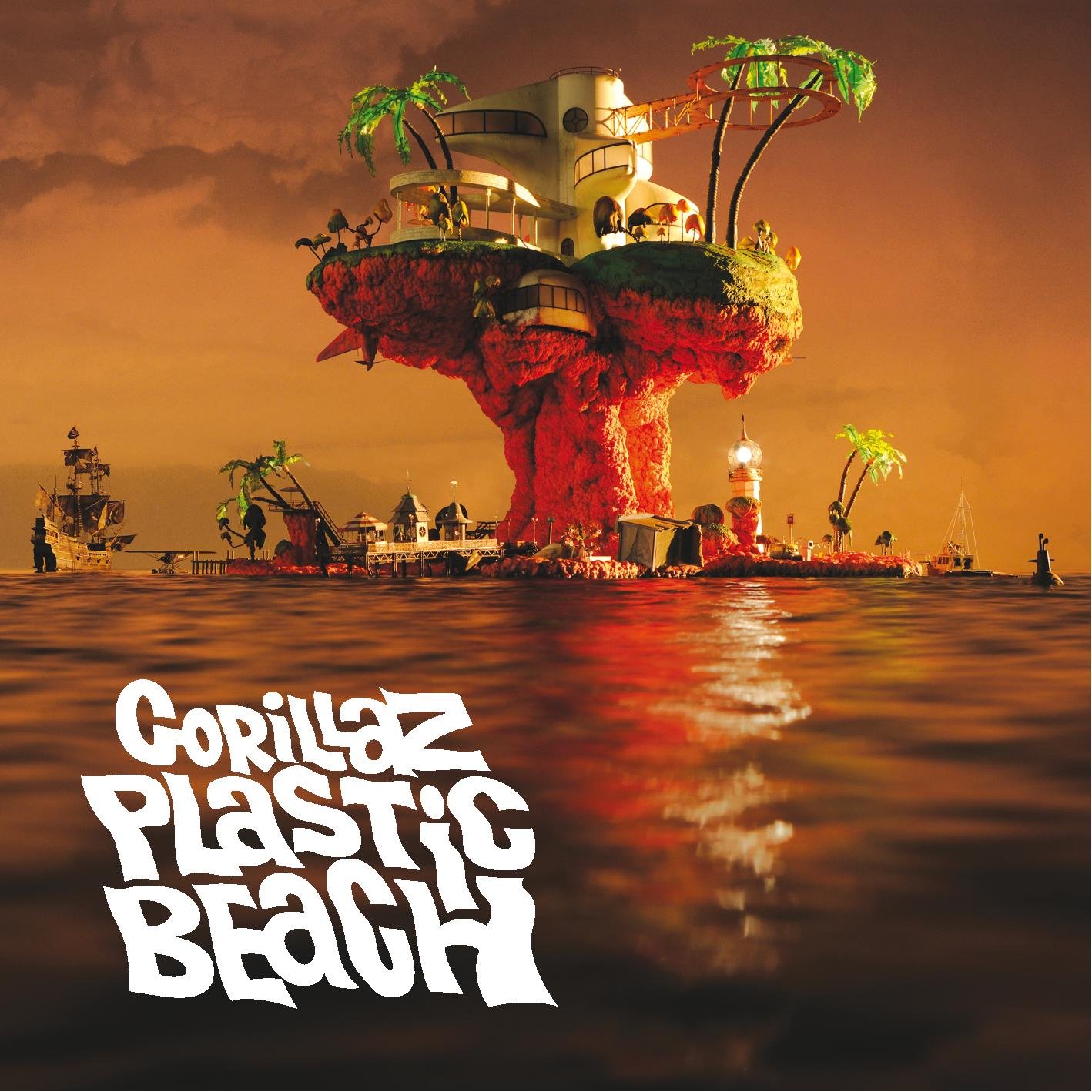
Plastic Beach, a Beautiful Image of Waste


The digital band known as the Gorillaz has made its quirky mark on the music industry through its use of eclectic sounds and vibrant imagery. The “band,” as it were, is an ensemble of four virtual members created by mastermind Damon Albarn. Each has their own unique and detailed story, which fit intricately together to make the narrative of the Gorillaz band. Their 2010 album, Plastic Beach, adds to this narrative of the band, but it is also a densely packed lyrical criticism of pressing environmental issues.


If we had only the name of the album to go off of, Plastic Beach, we could probably ascertain the nature of the album’s commentary. “Plastic” meaning fake, “beach” meaning some type of alleged paradise. The album cover shows an island, which we can safely assume is the proverbial Plastic Beach. We view it at a distance from the water, seemingly while swimming up to the shore. The divide created between the viewer and the beach by this stretch of ocean not only serves the cover well from a compositional standpoint, creating an interesting space for the band name and album title to appear, but it also creates a feeling that we are looking at a fast approaching picture of man’s fate.


The beach itself is made up of all of the plastic that has been discarded into the oceans. The shape of the island very clearly resembles a large, exploded mushroom cloud, at the base of which are dilapidated huts and tiki bars, fishing docks, and washed up sailboats. Once we’ve identified the familiar shape of the island, we can analyze its underlying iconic signification (an icon due to its resemblance to what it alludes to). When one thinks of a huge mushroom cloud, probably the product of a devastating nuclear explosion, they naturally associate the image with destruction, desolation, death, human avarice, war, and greed. And when such a symbol of total destruction is formed out of plastic waste, it is given new specificity. The accusations are clearly on an environmental front.


The forsaken shores symbolize our tendency to abandon ship when our mistakes catch up to us; when we’ve realized our lifestyle of waste was never sustainable. Then, rather than remedy the situation, we just build on top of our waste. A futuristic mansion rests on the top of the mushroom cloud, a beautifully constructed metaphor of unapologetic profit at the expense of our planet. The plastic is painted green to look like grass, painted to disguise the ugliness of what’s underneath. Plastic trees are installed throughout the island to perpetuate the illusion that such a place could ever support actual life.


After the opening track, an Arabic orchestral intro, we hear “Welcome to the World of the Plastic Beach,” featuring artist Snoop Dogg. Snoop asks politely but firmly for our attention, to tell us “The revolution will be televised, and the pollution from the ocean, now with devotion.” This is but one of many lines articulating the Plastic Beach. It is a isolated phenomenon contained on one single island. This Plastic Beach is the world in which we live; the world we have created.


This cover alone delivers a brutally honest message, communicated well with recognizable and powerful symbols. When followed by sixteen enlightening tracks, it is nothing less than sobering.

Thursday, September 20, 2018

Captain Marvel's Lead


After seeing the most recent Avengers movie, Avengers: Infinity War, the ending cutscene got everyone’s attention. The reference to Captain Marvel was small, but something that took most viewers by surprise. Now the official movie poster and trailer have been released and it is quickly becoming one of Marvel’s most anticipated movies. But there are some interesting things about the newly released movie poster.

As shown, Brie Larson is playing the lead role Captain Marvel. Something I feel like most people don’t know though is that Captain Marvel in the Comic series was originally male. I believe this sudden change in lead roles from comics to movies has a lot to do with the MCU’s (Marvel Cinematic Universe) lack of lead female roles. Atleast female roles that have gotten their own movies. This could be a push to help support Women’s equality. That it’s not always the man saving the world. Especially the way things were left in the most recent Avengers movie, we can not help but think as viewers that the distress call to Captain Marvel is anything less than a call to save the “Avengers, Earth’s mightiest heroes.” 


In the background you can see one of the jets that Brie Larson’s role will fly in the movie, something that brings a bit more realism into the audience's eyes. Becoming a fighter pilot is no easy task, but it is something that is not impossible.

By watching the trailer and looking at the poster, the viewer gets to see that Captain Marvel in the beginning is a “normal” living woman that is also a jet pilot, which is featured in the poster. She has a normal life that is possible for other to live. It’s real. People can look at her and feel kind of a connection. Until things take a twist and fantasy falls into her life. She becomes someone with superpowers that has the strength to defeat those trying to hurt others. She becomes the Heroine that is needed.

As a pretty consistent viewer of the Marvel series, it is apparent that Marvel gets people that are good intentioned and are believably a hero/heroine, to then amplify the situation, increasing the “evil” in order to increase the “good.” Which is why I believe so many people can relate to these types of movies. Because they can relate to the good in the lead role. At least we all want to relate to the good.

I believe this poster has just enough realism in it to draw a crowd to the theatre with the knowledge that there is going to be a good amount of fantasy because it is a marvel movie. Overall it is a good ad that I’m sure has gotten the attention of many Marvel Fans.

A Biker's Identity Crisis

Mayans MC, a spinoff of the widely successful TV show Sons of Anarchy, made its debut into the FX universe on September 4th. Mayans MC tells the tale of several members of a outlaw motorcycle gang as they deal with the consequences of being involved in illegal activities, including the drug trade and dealing arms. In addition the gritty crime action, the show is also able to focus in on the familial dynamics within the gang and its affiliates, and the issue of where identity and loyalty should be placed in such a cut throat world. 

Set in southern California near the US-Mexican border, Mexican-American culture and the characters desire to remain loyal to their roots plays a prominent role within the show itself. Upon the show’s announcement, the FX network released this poster, to advertise as well as artistically tease the show’s Hispanic premise.

Visually the poster is designed well—the artwork within is centered, creating symmetry that is attractive to the eye. There are not too many words and the font remains consistent and complementary to the theme of the poster. There is no white space, as the whole poster is colored with various shades of red, green, blue, brown, and gray. However, these colors do not make the poster any less visually appealing, and serve as symbols as well. In addition to the colors, other—and more subtle—symbols on the poster include the ancient Mayan symbol behind the main subject’s head, the skeleton aligned on the left half of the biker, and the desert landscape.

The use of semiotics allows for deeper analysis of these symbols and their significance in relation to the deeper themes of the show. The symbols help signify the importance of Mexican-American culture within the show: a skeleton representing the artwork common around the Mexican holiday of Dia de los Muertos (Day of the Dead), the shades of red and green found on the Mexican flag, and the shades of Mayan blue placed on the upper section of the poster. All of these aspects of Mexican-American culture can in turn signify the large theme of identity and where loyalties lie within this violent universe. The considerable use of black and red tones within the artwork represents violence and conflict-conflict involving clashing cultures.

The idea of being loyal to cultural roots is not just limited to the plot within the show, but also had a role within the show’s production.

The concept of appropriately representing the minority experience within the United States had been a goal of the showrunners since its creation. In an interview with The Hollywood Reporter, show creator Kurt Sutter discussed his mission to find show writers that could relate and accurately portray the characters’ experiences. Following months of research into the culture of Latin-Americans living in the Southwestern region of the United States, Sutter was able to sign on 6 more show writers, consisting of 3 men and 3 women, all of which were of Mexican-American decent. In addition, Sutter only hired Latin-American actors for the roles that required them to avoid whitewashing the show to create a genuine atmosphere. Sutter’s dedication to being loyal to the Mexican-American cultural ideals through proper representation gives the show an authenticity that is hard to replicate within today’s pop culture.

Analysis with the use of semiotics allows for a deeper understanding of the deeper themes within a piece of media. In this case, thematic ideals of being loyal to cultural roots and proper identification is able to be seen by the imagery and symbols with the show’s poster as well as the the show’s production and composition itself. The overall violent and menacing tone of the poster depicted by its symbols helps to represent the theme of conflict(both literal and relative to the characters’ identity crises) that is prominent within the show, while showrunner Kurt Sutter proves to allow for proper identification within Mexican-American culture by avoiding the whitewashed feel that many shows popular in today’s culture contains.