Thursday, November 8, 2018

Through the Psychoanalytical Lens: Freaky Friday

In the movie Freaky Friday, high schooler Anna Coleman and her mom Tess Coleman, an author and psychologist, can’t find a solution to their constant fighting. They receive the same mysterious fortune from the fortune cookies at a Chinese restaurant and wake up the next morning to discover they’ve switched bodies. As they work together to find a way to switch back, they gain greater understanding and empathy for one another. Using a psychoanalytical lens, Anna and Tess’ true motivations and behavior as well as the audience appeal for this movie genre can be discovered.

At first Anna Coleman seems like a typical teenage girl generally angry at the world because nothing seems to go in her favor. She has a teacher who likes to pick on her, a old middle school friend who now bullies her, a crush on an older guy who doesn’t know who she is, and a mom who seems to always side with her brother.

Tess, Anna’s mom, doesn’t see any of this, instead she chooses to believe that Anna is only being difficult because she wants to. Anna craves to be accepted by her peers, her crush, and especially her mother and that’s the reason for her seemingly harsh, angry behavior. It’s also revealed that the reason Anna has been acting out is because she’s worried that Ryan, Tess’ new fiance, will replace her dad who died several years before.

Anna’s mom, Tess, is a renowned psychologist with her own book and practice, yet ironically she can’t seem to figure out how to mend her relationship with her daughter. Tess’ behavior towards her daughter comes from a place of cluelessness and frustration. She simply doesn’t know how to help her daughter or how to interact with her without fighting. Instead of talking to Anna like a typical mother would to her daughter, Tess tries to treat her like one of her patients which Anna greatly resists.

A lot of Anna and Tess’ conflict comes from misunderstandings about the other person’s life, thus the switch allows them to understand everything they could’ve known if they had simply communicated better with each other to begin with. Tess is jealous of Anna’s youth and of her carefree life as a 15-year-old. Anna is also jealous of Tess’ job and the money it gives her and the freedom to spend it however she likes. When they switch bodies, they realize the other person faces a lot more hardship in their daily lives than they first imagined. Anna realizes Tess’ worklife is very difficult and stressful, and Tess realizes Anna’s high school life is more challenging and complicated than she remembered it being for her. By the end of the movie, they realize they would rather be themselves than live another person’s life.

The appeal for this kind of movie comes from the innate curiosity about what it’s like to be someone else and live someone else’s life. This is an impossible desire that can only be fulfilled in fictional movies. This may also come from our desire to be extraordinary and free from the constraints of ordinary life. In that case, this movie has a similar appeal to that of superhero movies.

The switch in Freaky Friday reveals a lot about Anna and Tess’ motivations and inner feelings and helps them to better understand each other. A psychoanalytical examination of the movie shows the deeper reasons behind the conflict between Anna and her mother as well as some of the possible reasons for the movie’s appeal to a wide audience.

Ideologies of The Matrix


The Matrix is a movie about a cyber-hacker (Neo) who is shown how the human population is being subdued by the government so that their bodies can be used as an open energy source. After Neo has seen the truth of the world around him, and fully realized his capabilities, he is able to do whatever he pleases, even manipulate time.He is no longer held back by the reality around him, and is able to do things he never imagined. The Matrix describes two separate ideologies, one where humans are completely controlled by the government, and one where there are no limitations on what a human can do.

At the beginning of the movie, Neo lives in a world where the government has complete control, and one of the opening scenes shows that there are almost no restrictions on the government in what they can do. Neo, along with everyone else in the world, are in a society whose ideology borders on absolutism. Neo is a cyber-hacker, so he is specifically trying to get around the digital limitations the government has put on the people. His everyday job is subversive to the government’s regime. The subjects have no freedom to their lives, and must follow obediently what the government has said that they should do. They do not know that the world they live in is not reality, but instead a simulation made by the government to keep the population subdued. There is no autonomy in the people or their choices.

One of the main protagonists in The Matrix, Morpheus, is considered the most dangerous man in the world. He notices Neo’s hacking skills, and decides to show him the truth behind the world he lives in. He ‘wakes up’ Neo, and helps him gain control of his real body. He then teaches Neo how to master different things, like controlling things with his mind and different forms of martial arts. Neo does not learn any of this information, Morpheus simply downloads it directly into Neo’s brain. Once he has gone through all of his ‘training’, Neo is able to do things that he never imagined possible in his simulated body. He is a martial arts master, and able to even beat Morpheus in a fight. 

There are no limitations to Neo’s abilities, either mental or physical. He does not have to abide by ordinary laws of physics or what is natural, and isn’t controlled by anyone, not even the government. He has complete autonomy, and becomes an unstoppable force. At the end of the movie, one of the major twists is that the audience is shown that Neo has figured out how to manipulate time, and stop bullets in mid-air. The message that The Matrix is attempting to send this that if humans were to have complete autonomy, even though it would not work societally, it would allow people to achieve things far beyond their expectations. When humans are subjected to government control, they are fearful and weak, but when they have control over their own actions they are unstoppable.

"One Love"- A Representation of Unity

Bob Marley revolutionized the music industry with his happy and reassuring songs that aimed for the unity of the people. The song “One Love” expressed his desire to unite the people of different cultures and races. The song’s music video illustrates a black child singing the song’s lyrics as he sits in a chair. As the kid sits in the chair singing, the video cuts to different people dancing happily while singing. The music video ends with a large group of people walking and singing as they embraced one another regardless of their race and culture. With the help of the study of representation, we can identify that the message Bob Marley attempted to deliver was that of loving one another despite of differences.

Prior to the release of the song, Bob Marley was known for his lyrics about love and peace. In a time of constant fight between races and cultures across the world, Bob Marley became the voice of peace and unity. In America, the song became an anthem that aimed to help the relationships between African Americans and Whites. Due to this, the music video focused on the depiction of these two groups and their similarities that allows them to unite.

In the music video, we are able to observe the two groups (Whites and Blacks), which Marley aims to “get together and feel alright”. The two groups are displayed as being joyous while dancing together. The depiction in the music video of the two groups was contrary to the actual events that were happening in America at that time, for violence reigned. However, it allowed for the “open up of culture to the play of power”. Marley’s video represented a new world in which whites and blacks placed their differences aside and came together through love. As depicted in the video, the power battle was left behind and the two groups enjoyed their time together.

Furthermore, the music video illustrates an innocent black child that sings the song with passion and hope that one day the fight between the groups will stop. The kid’s vision is centered in the idea that unity will be a “contribution to the development of society”. Through the depiction of the Kid, Bob Marley is able to express his desire. Also, Marley is able to show that the kids are the new generation that will make the unity possible. The lyrics “hear the children crying (one love)” represent the children as the factor that will bring the groups together.

At the end of the video, the two groups are able to come together as a whole as they dance and laugh. The black child leads the group in order to represent the reality of his dream. His voice was able to bring the two groups together through love. By creating this video, Bob Marley was able to represent the power of love to create change in a divided society.

The song “One Love” highlights the importance of love in bringing peace and people together. The music video displays the possibility of a dream becoming a reality. Through the use of the lyrics and the video, Marley is able to represent the change between the two groups that leads to love and happiness.

Grand Theft Censorship


Image result for gta 5
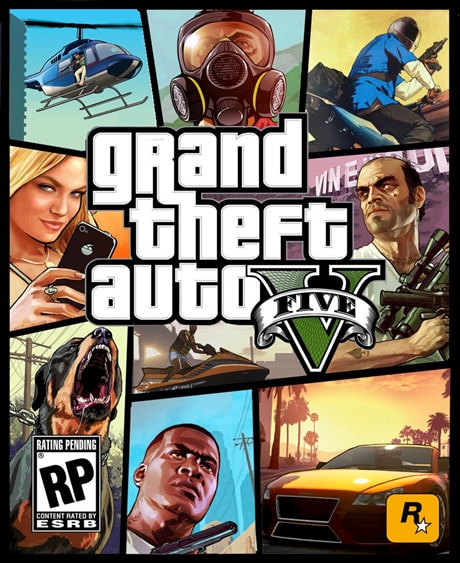
Grand Theft Auto (GTA) is an open world action-adventure video game series published by Rockstar Games, and was first released in 1997. Since then, the game series has had numerous sequels and spin offs leading up to its most recent release of GTA 5 which came out in September of 2013. The video game series has had critical and commercial success, having shipped more than 250 million units, making it the fourth highest selling video game franchise of all time, right behind the Mario, Pokemon, and Tetris franchises.
           
The GTA franchise allows the player to take on the role of a criminal in a big US city. There, the player can either complete missions and tasks, or just roam around the giant and incredibly detailed open world city and do pretty much anything they want. I will specifically be addressing the most recent GTA game, GTA 5, since it the most up to date, expansive, and interactive game of the series.
           
GTA 5 takes place in a recreation of Los Angeles California. While most games have a direct and specific objective, the majority of GTA players decide to just roam around the city and cause mayhem wherever and however they feel like it. The game is rated M for Mature, and has been criticized by many to be extremely violent, have themes of drug use and crime, and be extremely sexualized with the use of strip clubs and prostitutes. While the game is meant to be sold and played by users 17 and older, there are many loopholes for children younger than this to have easy access to the game. GTA 5 broke industry sales records and became the fastest selling entertainment product in history, earning over $1 billion in its first three days.
           
According to Althusser’s ideological state apparatuses, GTA causes . Many people have criticized GTA for causing a rise in violent behavior among players outside the game. The game has taken this ideology and sparked up even more criticism by making police and the law the “enemy” in the game. This has sparked controversy between game developers and government officials. By having so many American youth playing the game, it has caused negative psychological disruption shown through their behaviors and actions. However, the GTA franchise has purposefully not used actual names, locations and brands in the game, even though it is clearly representative of real life.
           
Because GTA is an American video game, it has had the privilege of being able to choose whatever content to put in their game. By being so successful in both its game design, and its financial success, the GTA franchise has reached such a large audience and psychologically affected many of its younger players to be anti-government and adopt anarchy. Not only this, but the game doesn't explore the real-world consequences of these actions, and makes these horrific actions seem entertaining.
           
In conclusion, the GTA franchise has been extremely negative toward youth behavior and their perception of the government and the law. Because of the United States policy against censorship, People who are opposed to the ideology of the game have no way of combatting its widespread influence on today’s youth.

Power Struggles in Far Cry 4

Far Cry 4 is an action-adventure first-person shooter created by Ubisoft and released on November 18, 2014. The user plays as Ajay Ghale, a young Kyrati-American, who is caught in a civil war in Kyrat, a fictitious Himalayan country filled with poverty, a drug trade, and authoritarian rule. The story follows Ajay Ghale as he helps the rebel group known as the Golden Path fight against the tyrannical king Pagan Min.

The story begins with Ajay Ghale as he is traveling to Kyrat to fulfill his mother’s dying wish: to bury her ashes in her homeland. On the way there, the bus he is on is ambushed by Pagan Min’s royal army and you learn just how powerful and psychotic the Kyrati dictator is. Pagan Min holds him prisoner but treats him well as he claims that he was romantically involved with Ajay’s mother.

Ajay is able to escape with the help of the Golden Path, a rebel group created years before by Ajay’s father, Mohan Ghale. Ajay meets the current leaders of the Golden Path, Sabal and Amita, who tell him that he must help them fight and be the symbol for the people. Ajay has no choice since the Royal Army has control of the only airport and sealed the borders.

The power dynamic of the Golden Path is interesting because although Sabal and Amita are working together towards the same goal, they each have different morals and ideas on how to get to that goal. Sabal tends to favor traditional values whereas Amita favors more progressive ones, one of which is relying on the drug trade to build up an army. This power struggle between the two causes stalemates that Ajay Ghale is forced to work out. There are many scenes in which Ajay Ghale walks into a heated argument between Sabal and Amita and where you have to choose whether to go with Amita’s plan or Sabal’s. Each plan has its benefits but also has drawbacks and it can mean the loss of soldiers, important locations, or other consequences.

The goal of the game is obviously to free Kyrat from Pagan Min’s rule and the way you do that is by freeing various radio towers and outposts controlled by the Royal Army. The radio towers allow the Golden Path to spread the word of their cause to the people of Kyrat in order to strengthen their group. As you progress through the game, Pagan Min’s power diminishes as the Golden Path’s power rises until you finally reach Pagan Min’s doorstep. You then have the choice to let him leave Kyrat in his helicopter or kill him. This power is given to Ajay Ghale but also to the player.

The player also must choose who becomes the new leader of the Golden Path. If you choose Sabal, then the country becomes a religious fundamentalist theocracy and all of Amita’s supporters are executed. If you choose Amita, then the country becomes an authoritarian drug state where all the farmers are forced to work in factories and children are enlisted in the Golden Path to fight against the remaining Royal Army. Whichever person you choose requests that you kill the other to prevent another civil war and you again have the choice to let them live or kill them. In the end, all the work you do seems as if it was for nothing as you learn that Sabal and Amita are no better than Pagan Min.

Far Cry 4 is a game in which the player is constantly dealing with power struggles and must make the ultimate decisions. It is an open world game, so you are free to roam wherever you please. Though there are some limitations, in the game the Royal Army closed the borders so that you are stuck in Kyrat. The lack of power you have in the beginning is limiting but changes drastically throughout the game as you help the Golden Path grow to power and overthrow the authoritarian government. The different conflicts, power struggles, and limits in this game can allude to those of modern-day countries similar to that of Kyrat where poverty, drug trade, and tyrannical rule exist.

"Bad Blood": Intertextuality Overload


Taylor Swift’s music video for the song “Bad Blood”, released in 2015, features a storyline reminiscent to that of an action movie, with Swift training for the duration of the video leading up to a final confrontation with her enemies. Swift packs the video with her female friends and introduces their different “characters” in a manner similar to that of a film’s credits scene. The music video also expands on the action movie theme by littering numerous references to hit films throughout the video. By analyzing the music video using the concept of intertextuality, Swift sends a message of female empowerment, proving that women can be their own heroes.

Intertextuality occurs when a media text includes references to or borrows content from other media texts. According to Haastrup, these references can be either explicit— alluding specifically to another text through quotation such that anybody can understand the reference— or implicit— wherein only those with a familiarity of a genre might be capable of understanding. Whether explicit or implicit, the references to other media texts are included because they serve some purpose to the media product. Specifically, intertextuality works as a storytelling device that advances the plot and assists in character building.

Included in the multitude of references found in the “Bad Blood” music video are films that feature strong female characters such as Kill Bill, The Hunger Games, and Divergent. The inclusion of samurai swords and the scene of Swift fighting in the snow pays homage to the monumental moment in which the Bride fights against O-ren in Kill Bill. The entire training sequence implicitly refers to the scene in which the tributes learn how to fight and survive in the arena in The Hunger Games, with Swift even donning the famous Katniss braid. The training sequence is also reminiscent of the sort of behavior and activities the Dauntless (the brave faction) participated in throughout the Divergent series.

One thing shared between these three films is that they all feature a strong female lead who seeks to gain control of their lives. The Bride, Katniss, and Tris are women have been subjected to the power of a higher authority and they seek to finally break free of this control. Despite the barriers in their way, these women stand firm in what they believe in and fight to reach their own goals. In the case of Katniss and Tris, they even became leaders in their own right, someone to look up to in desperate times.

The deliberate inclusion of these movie references serves as a tool of character building for Swift’s character in the music video, as well as in real life. Swift’s character in the music video follows in the lead of the women in these movies by learning how to stand up for herself. Swift will not allow her enemies to humiliate her and is dead set on making sure they do not prevail. Through her physical and mental growth, Swift mimics the strong willed nature of The Bride, Katniss, and Tris, ultimately refusing to be broken. Similarly, Swift refuses to allow her enemies in real life (i.e. her rivals, critics, and the media) to defeat her. She is capable of rising through the constant hate and contempt thrown her way, effectively becoming her own hero. Swift does not collapse under pressure, but rather becomes stronger because of it.

By including references to films such as Kill Bill, The Hunger Games, and Divergent, Swift aligns herself with the strong female leads in these movies. The intertextuality included in the “Bad Blood” music video assists in character building by showing that Swift is ultimately the one in control of her own life; she refuses to let others tear her down. The music video also serves as extension of Swift herself, mirroring her actions and emotions in real life. Much like the females in these action films, Swift is capable of being her own hero and she plays that role well.

The Eyes Have It

This critique will examine the importance of the main characters’ eyes in the anime “Satsuriku no Tenshi,” or “Angels of Death,” through the lens of semiotics. The series was released by J. C. Staff in July of 2018 and finished the season with 16 episodes.

“Angels of Death” follows Rachel Gardner, who woke up in a basement without her memory. On her way out, she is pursued by a bandage-covered, scythe-wielding serial killer. In her attempt to escape, though, she finds herself in the hands of another psychopath who wishes to kill her. The first killer attacks the second and promises Rachel that he won’t kill her until they make it out of the building. As the two make their way to the top, they are confronted with a number of other killers who they have to thwart in order to escape.

In order to analyze this anime, I will be using semiotics, which is the study of signs. According to Danesi, “a sign is anything … that stands for something other than itself.” In other words, a sign is a symbol which represents either another symbol or an abstract idea.

The primary sign that I found in “Angels of Death” is that of eyes. Eyes signify “windows to the soul.” In other words, by looking at someone’s eyes, you are able to learn about their character. Typically, this would refer to looking at how someone’s eyes express, or don’t express, the way that they feel about something. This is the case within the show when characters are talking about Rachel.

Throughout the series, people tell Rachel that she has eyes that are alive, yet dead at the same time. It is later revealed that this is because Rachel is a murderous sociopath who kills people and sews them back up. Her eyes, like her personality, are dead because she doesn’t give a second thought to murdering people, but alive at the same time because she still desires close relationships, which causes her to sew the bodies back together.

Another prominent example is Isaac “Zack” Foster, the first serial killer that Rachel encounters and the one she eventually befriends. Originally, Zack appears to be a heartless killer bent on causing chaos. However, it is later shown that his murder spree stems from the pain caused in his childhood. Zack’s father hated him and tried to set him on fire when he was young. Instead of accepting his fate, Zack ran towards his father so they would both die together. But Zack survived. This caused his mother to hate him, so he was sent to the orphanage.

He was eventually adopted but his foster parents were abusive and turned out to be murderers, as well. They killed kids and forced Zack to bury the bodies. Ultimately, Zack killed them in their sleep and ran away. Afterward, he started killing people who looked happy because, to him, happiness equated to evil.

This same idea is present in his eyes, one of which is a black, the other yellow. This can be traced further to darkness and light. The black eye represents darkness and, therein, the side of him that only wants to kill. The yellow eye represents light and, further, the side of him that wants to do good. Put together, his eyes are the representation of his internal struggle with good and evil. While he wants to do good, the only way he knows how to do so is by killing the people he perceives to be bad.

Thus, in “Angels of Death” a character’s eyes serve purposes beyond giving them a unique physical appearance, even so as to reveal what sort of emotional and mental struggles are going on beneath the surface.